
2025
Diwan Al-Taaleem
Rebuild the information architecture, the interface, and a design system to hold it together. They were treated as one connected problem, not three handoffs.
Education
Website Design
UI/UX Design
Know More
Diwan Al-Taaleem runs education programmes across several levels, and it keeps growing. The website had gathered content far faster than it gained any structure. Programmes, services, and institutional information had piled up until they were hard to tell apart.
Each new addition made the site a little harder to navigate than the last. The growth that should have been a strength was turning into a liability. That meant solving the architecture and the system before any visual work began. The look followed the logic.

The Hard Part
Labels and layouts were inconsistent, so people guessed their way around rather than navigating. Priority content was not surfaced, and related things lived apart. With no system underneath, every new page made the whole thing a little worse.
Maintenance was getting harder for the team, too. Growth simply was not sustainable on the structure that existed.

What I Did
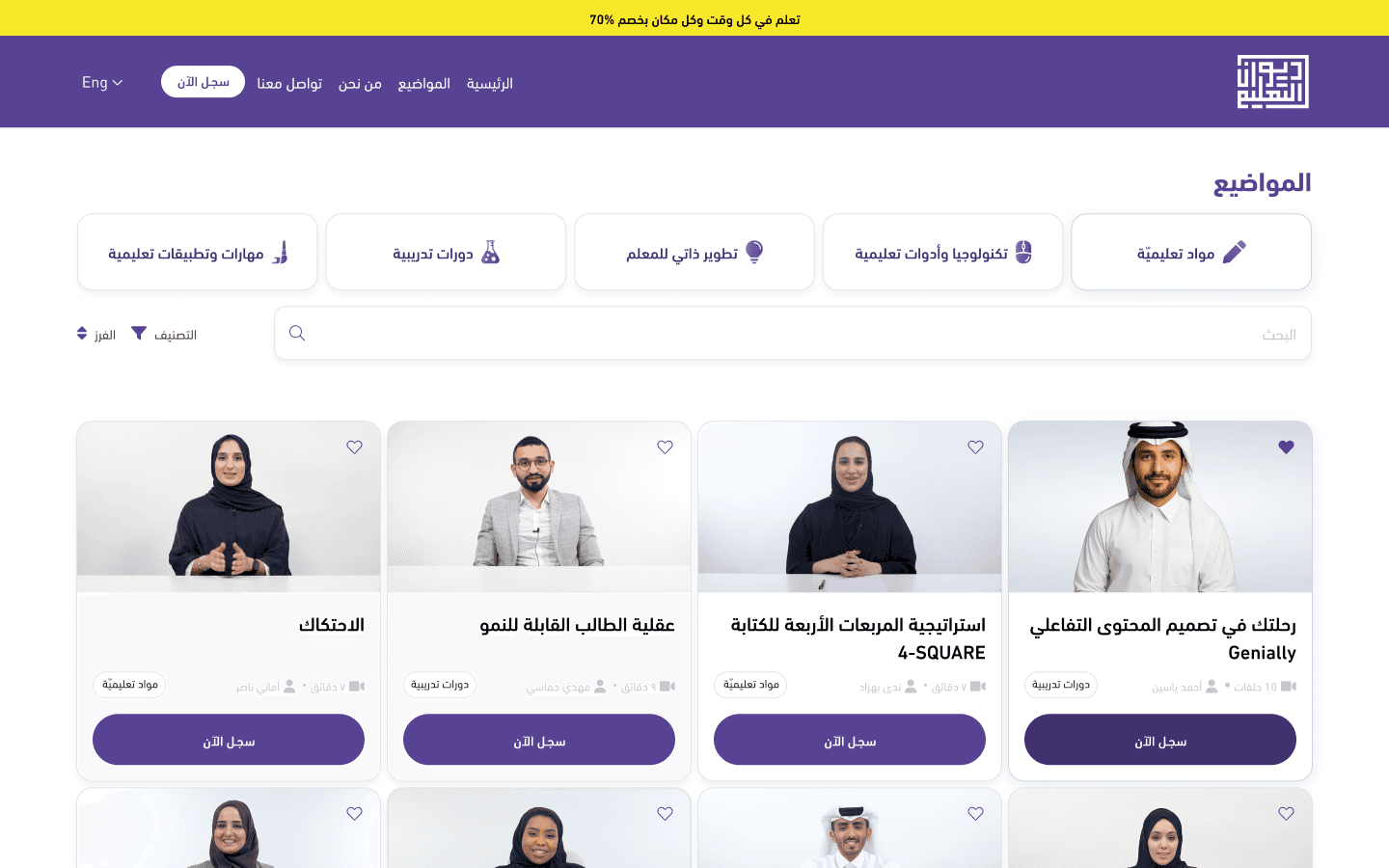
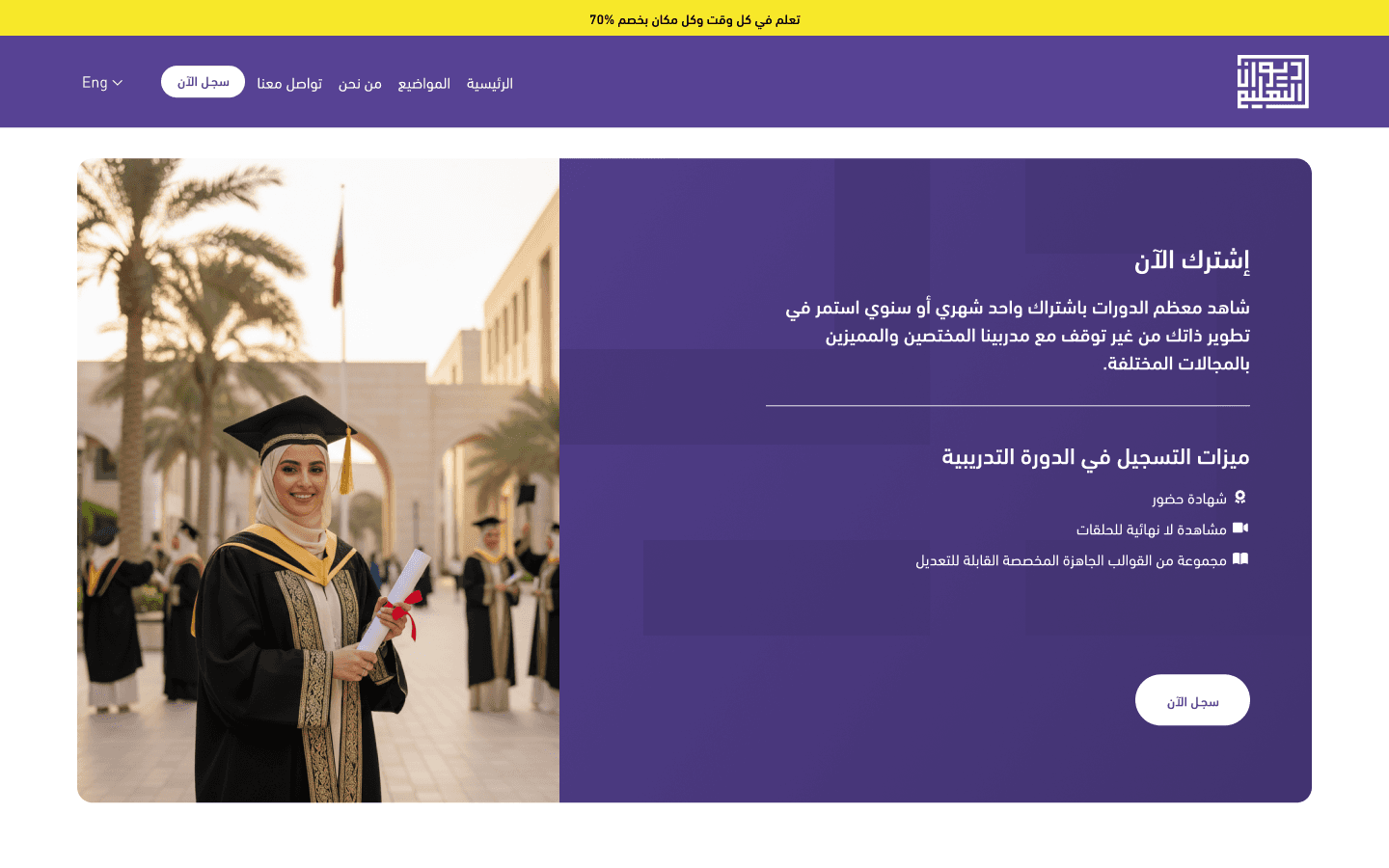
I restructured the whole site around real journeys before touching any visuals. Navigation was simplified and the groupings were clarified. A modular design system then locked the consistency in place.
Pages were put on standard templates, and the team got reusable parts to build with. Consistency now holds as they add more, rather than degrading.

What Changed
Editors now build with a system instead of fighting one. Students, parents, and partners meet the same predictable structure in every section. What used to be fragile is now maintainable, and the site can grow without coming apart.
The system carries the consistency that used to depend on individual effort. That is the difference between a site that ages well and one that does not.

The Call
Most teams treat the design system as a later nice-to-have, something to reach once the visible work is done. I put it in scope from day one. It is the least visible part of the project and the part that decides whether any of it survives.
Arguing for invisible infrastructure up front is rarely the popular call. Two years of growth is what proves it was the right one.

More Works


FAQ
01
Are you available?
02
Full-time, freelance, or both?
03
What kind of work do you take?
04
Remote, on-site, or both?
05
Bilingual?
06
What do I need to get started?
07
What about unpublished or NDA work?
08
How long does an engagement take?
2025
Diwan Al-Taaleem
Rebuild the information architecture, the interface, and a design system to hold it together. They were treated as one connected problem, not three handoffs.
Education
Website Design
UI/UX Design
Know More
Diwan Al-Taaleem runs education programmes across several levels, and it keeps growing. The website had gathered content far faster than it gained any structure. Programmes, services, and institutional information had piled up until they were hard to tell apart.
Each new addition made the site a little harder to navigate than the last. The growth that should have been a strength was turning into a liability. That meant solving the architecture and the system before any visual work began. The look followed the logic.
The Hard Part
Labels and layouts were inconsistent, so people guessed their way around rather than navigating. Priority content was not surfaced, and related things lived apart. With no system underneath, every new page made the whole thing a little worse.
Maintenance was getting harder for the team, too. Growth simply was not sustainable on the structure that existed.
What I Did
I restructured the whole site around real journeys before touching any visuals. Navigation was simplified and the groupings were clarified. A modular design system then locked the consistency in place.
Pages were put on standard templates, and the team got reusable parts to build with. Consistency now holds as they add more, rather than degrading.
What Changed
Editors now build with a system instead of fighting one. Students, parents, and partners meet the same predictable structure in every section. What used to be fragile is now maintainable, and the site can grow without coming apart.
The system carries the consistency that used to depend on individual effort. That is the difference between a site that ages well and one that does not.
The Call
Most teams treat the design system as a later nice-to-have, something to reach once the visible work is done. I put it in scope from day one. It is the least visible part of the project and the part that decides whether any of it survives.
Arguing for invisible infrastructure up front is rarely the popular call. Two years of growth is what proves it was the right one.
More Works
FAQ
01
Are you available?
02
Full-time, freelance, or both?
03
What kind of work do you take?
04
Remote, on-site, or both?
05
Bilingual?
06
What do I need to get started?
07
What about unpublished or NDA work?
08
How long does an engagement take?
2025
Diwan Al-Taaleem
Rebuild the information architecture, the interface, and a design system to hold it together. They were treated as one connected problem, not three handoffs.
Education
Website Design
UI/UX Design
Know More
Diwan Al-Taaleem runs education programmes across several levels, and it keeps growing. The website had gathered content far faster than it gained any structure. Programmes, services, and institutional information had piled up until they were hard to tell apart.
Each new addition made the site a little harder to navigate than the last. The growth that should have been a strength was turning into a liability. That meant solving the architecture and the system before any visual work began. The look followed the logic.
The Hard Part
Labels and layouts were inconsistent, so people guessed their way around rather than navigating. Priority content was not surfaced, and related things lived apart. With no system underneath, every new page made the whole thing a little worse.
Maintenance was getting harder for the team, too. Growth simply was not sustainable on the structure that existed.
What I Did
I restructured the whole site around real journeys before touching any visuals. Navigation was simplified and the groupings were clarified. A modular design system then locked the consistency in place.
Pages were put on standard templates, and the team got reusable parts to build with. Consistency now holds as they add more, rather than degrading.
What Changed
Editors now build with a system instead of fighting one. Students, parents, and partners meet the same predictable structure in every section. What used to be fragile is now maintainable, and the site can grow without coming apart.
The system carries the consistency that used to depend on individual effort. That is the difference between a site that ages well and one that does not.
The Call
Most teams treat the design system as a later nice-to-have, something to reach once the visible work is done. I put it in scope from day one. It is the least visible part of the project and the part that decides whether any of it survives.
Arguing for invisible infrastructure up front is rarely the popular call. Two years of growth is what proves it was the right one.
More Works
FAQ
Are you available?
Full-time, freelance, or both?
What kind of work do you take?
Remote, on-site, or both?
Bilingual?
What do I need to get started?
What about unpublished or NDA work?
How long does an engagement take?