
2026
Qatar University
Proposed a future-state university platform that carries students, faculty, research, and partners on one site without flattening any of them
Higher education
Conceptual
Proposal
Know More
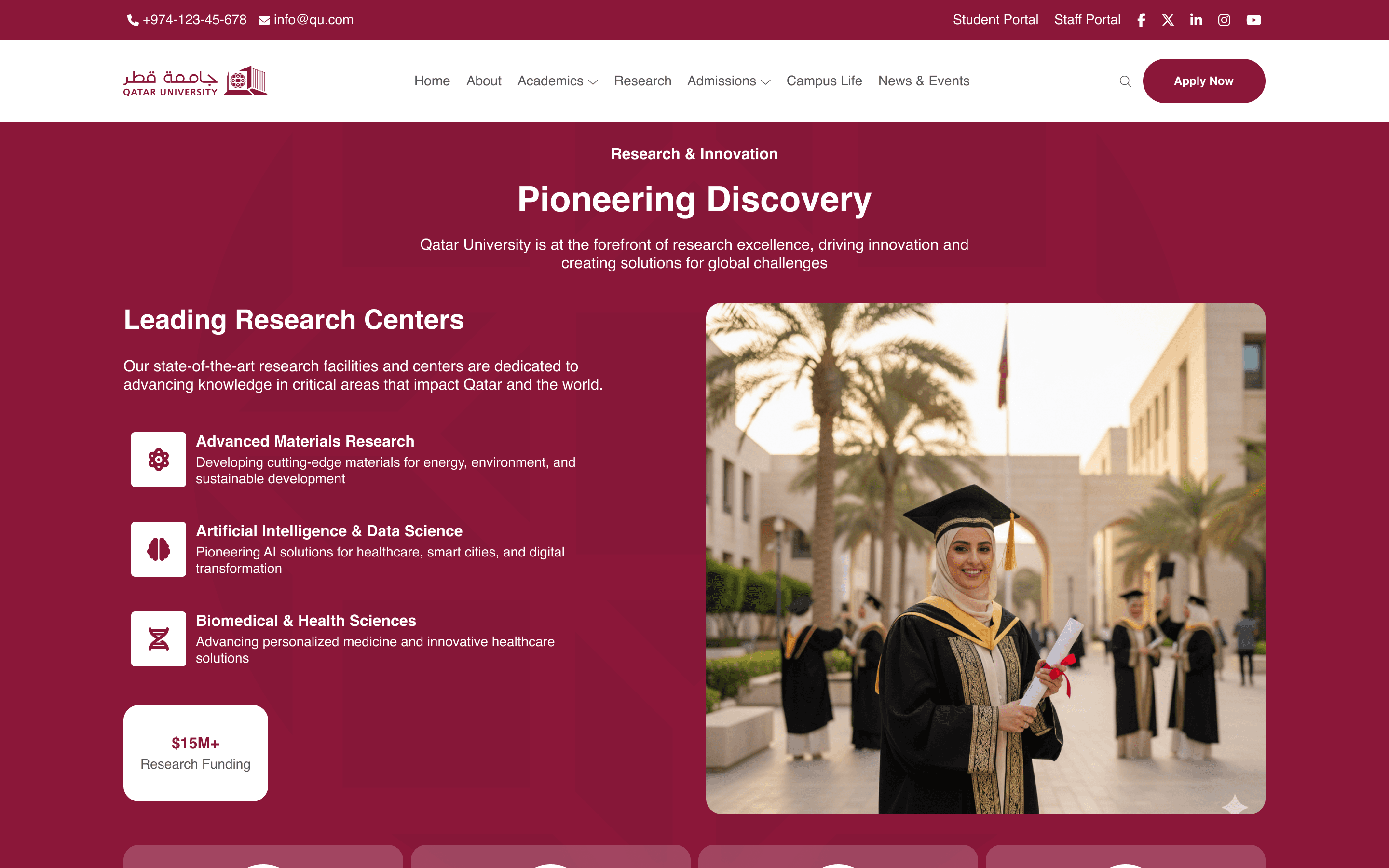
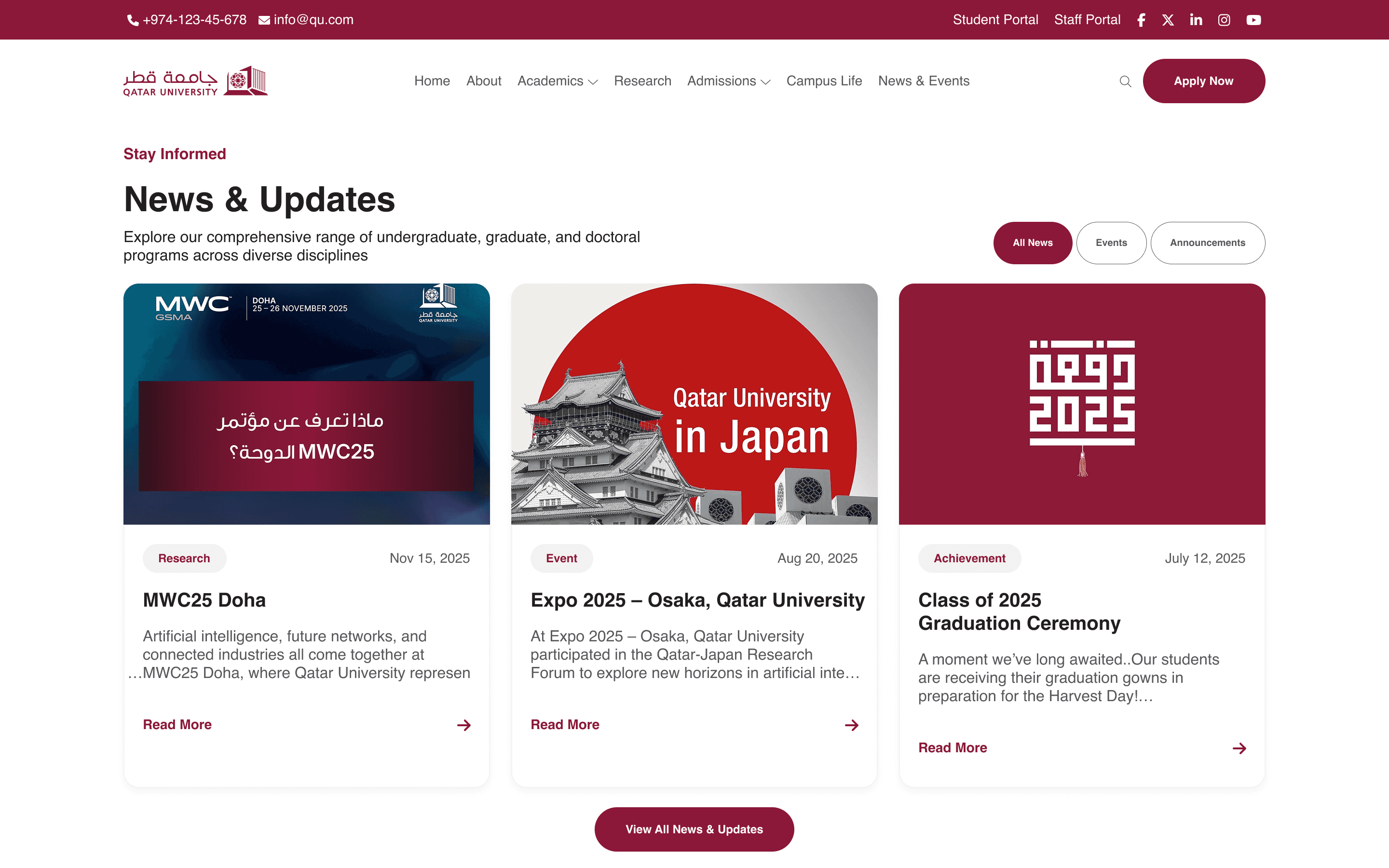
Qatar University is a large institution, and with size comes a particular problem. Dozens of audiences, hundreds of programmes, thousands of pages. A prospective student, a current student, a faculty member, and a researcher all want different things from the same homepage.
I treated information architecture as the design itself. Before any interface, the concept maps the journeys that matter. Each gets a short, legible path through an otherwise sprawling estate.
Applying, studying, researching, finding a person: these were the organising journeys. The structure came first, the visuals second.

The Hard Part
Scale is the whole problem. Faculties, programmes, services, and news all compete for the same space, and internal structure usually wins out over what users need. Audiences with opposite goals get funnelled down the same routes.
Programme information sprawls with no sense of progression, and navigation grows by accretion until depth defines the experience. Finding a single fact can take far too many clicks.

What I Did
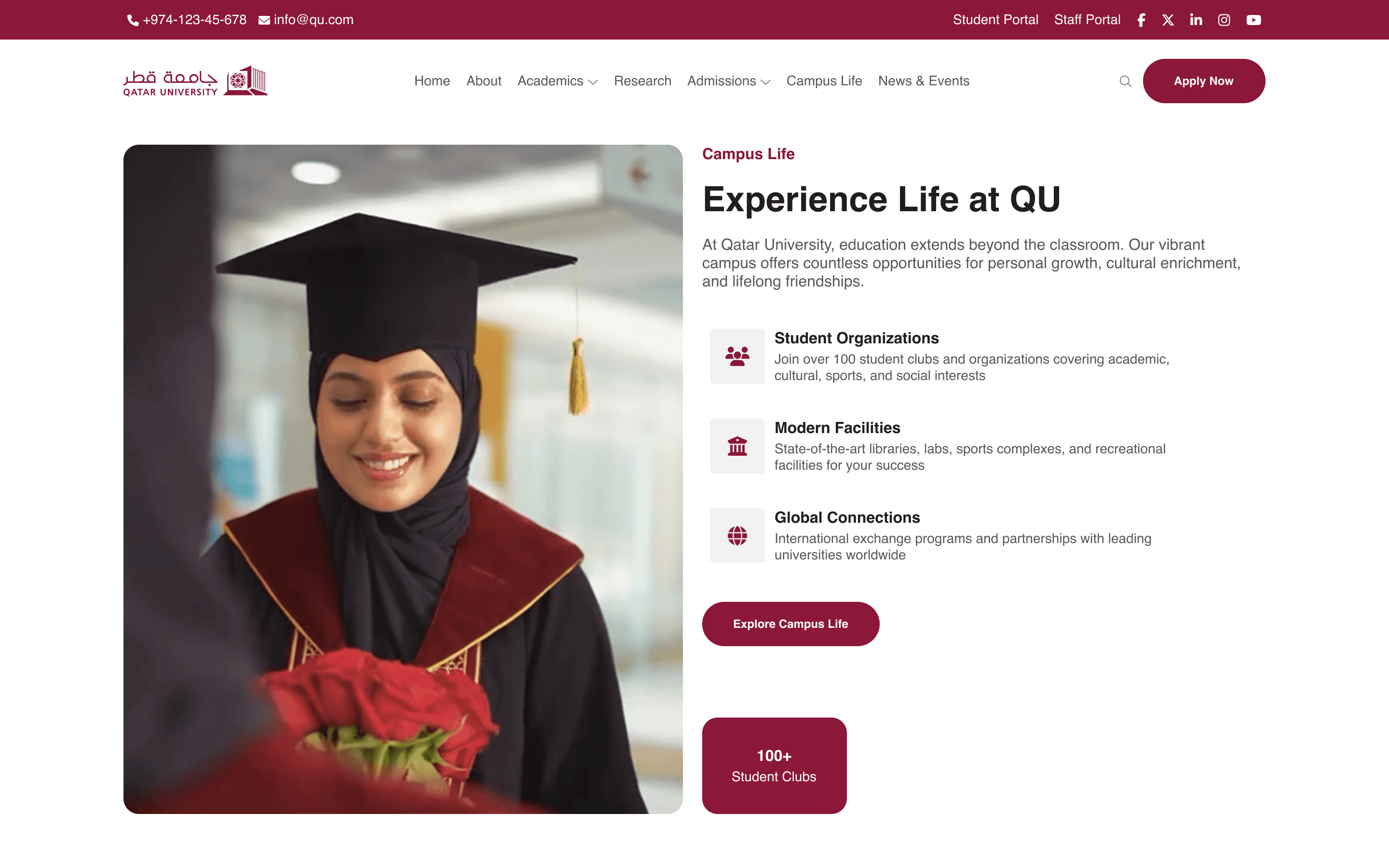
I rebuilt the structure around intent, giving each main audience a legible way in. Content was grouped by what people are trying to achieve, not which department owns it. Journeys were mapped and ranked, and navigation was flattened.
Labels were written in the words people actually use, and page templates were standardised so a programme page behaves the same wherever it sits. That also keeps the estate maintainable at scale


What Changed
The structure scales across faculties and research output as the institution grows. Each audience finds its own way in without the others getting in the way. Breadth becomes something you can navigate instead of drown in.
Being clear matters more than being exhaustive. The sitemap, in effect, is the experience, and everything visual rests on top of it.

The Call
The default for a university is to mirror the org chart online, because that is how the institution sees itself. I judged that users do not think in departments, they think in goals. The concept organises around intent even where it cuts across the structure.
Designing against the org chart is politically harder and far more usable. Clarity for the visitor was worth the friction internally.

More Works
FAQ
01
Are you available?
02
Full-time, freelance, or both?
03
What kind of work do you take?
04
Remote, on-site, or both?
05
Bilingual?
06
What do I need to get started?
07
What about unpublished or NDA work?
08
How long does an engagement take?
2026
Qatar University
Proposed a future-state university platform that carries students, faculty, research, and partners on one site without flattening any of them
Higher education
Conceptual
Proposal
Know More
Qatar University is a large institution, and with size comes a particular problem. Dozens of audiences, hundreds of programmes, thousands of pages. A prospective student, a current student, a faculty member, and a researcher all want different things from the same homepage.
I treated information architecture as the design itself. Before any interface, the concept maps the journeys that matter. Each gets a short, legible path through an otherwise sprawling estate.
Applying, studying, researching, finding a person: these were the organising journeys. The structure came first, the visuals second.
The Hard Part
Scale is the whole problem. Faculties, programmes, services, and news all compete for the same space, and internal structure usually wins out over what users need. Audiences with opposite goals get funnelled down the same routes.
Programme information sprawls with no sense of progression, and navigation grows by accretion until depth defines the experience. Finding a single fact can take far too many clicks.
What I Did
I rebuilt the structure around intent, giving each main audience a legible way in. Content was grouped by what people are trying to achieve, not which department owns it. Journeys were mapped and ranked, and navigation was flattened.
Labels were written in the words people actually use, and page templates were standardised so a programme page behaves the same wherever it sits. That also keeps the estate maintainable at scale
What Changed
The structure scales across faculties and research output as the institution grows. Each audience finds its own way in without the others getting in the way. Breadth becomes something you can navigate instead of drown in.
Being clear matters more than being exhaustive. The sitemap, in effect, is the experience, and everything visual rests on top of it.
The Call
The default for a university is to mirror the org chart online, because that is how the institution sees itself. I judged that users do not think in departments, they think in goals. The concept organises around intent even where it cuts across the structure.
Designing against the org chart is politically harder and far more usable. Clarity for the visitor was worth the friction internally.
More Works
FAQ
01
Are you available?
02
Full-time, freelance, or both?
03
What kind of work do you take?
04
Remote, on-site, or both?
05
Bilingual?
06
What do I need to get started?
07
What about unpublished or NDA work?
08
How long does an engagement take?
2026
Qatar University
Proposed a future-state university platform that carries students, faculty, research, and partners on one site without flattening any of them
Higher education
Conceptual
Proposal
Know More
Qatar University is a large institution, and with size comes a particular problem. Dozens of audiences, hundreds of programmes, thousands of pages. A prospective student, a current student, a faculty member, and a researcher all want different things from the same homepage.
I treated information architecture as the design itself. Before any interface, the concept maps the journeys that matter. Each gets a short, legible path through an otherwise sprawling estate.
Applying, studying, researching, finding a person: these were the organising journeys. The structure came first, the visuals second.
The Hard Part
Scale is the whole problem. Faculties, programmes, services, and news all compete for the same space, and internal structure usually wins out over what users need. Audiences with opposite goals get funnelled down the same routes.
Programme information sprawls with no sense of progression, and navigation grows by accretion until depth defines the experience. Finding a single fact can take far too many clicks.
What I Did
I rebuilt the structure around intent, giving each main audience a legible way in. Content was grouped by what people are trying to achieve, not which department owns it. Journeys were mapped and ranked, and navigation was flattened.
Labels were written in the words people actually use, and page templates were standardised so a programme page behaves the same wherever it sits. That also keeps the estate maintainable at scale
What Changed
The structure scales across faculties and research output as the institution grows. Each audience finds its own way in without the others getting in the way. Breadth becomes something you can navigate instead of drown in.
Being clear matters more than being exhaustive. The sitemap, in effect, is the experience, and everything visual rests on top of it.
The Call
The default for a university is to mirror the org chart online, because that is how the institution sees itself. I judged that users do not think in departments, they think in goals. The concept organises around intent even where it cuts across the structure.
Designing against the org chart is politically harder and far more usable. Clarity for the visitor was worth the friction internally.
More Works
FAQ
Are you available?
Full-time, freelance, or both?
What kind of work do you take?
Remote, on-site, or both?
Bilingual?
What do I need to get started?
What about unpublished or NDA work?
How long does an engagement take?