
2026
QIC-AM
Led the redesign, reorganising how the firm presents its strategies, philosophy, and governance. The site was designed to be assessed quickly, not browsed.
Financial Services
Website Design
UI/UX Design
Know More
QIC manages money across many strategies and markets, for an audience of institutional investors. They read a site to verify and decide, not to be inspired. Structure, transparency, and track record are what they check before they will take a meeting.
The site had to feel as large and serious as the firm behind it. It also had to be quick to assess, and those two pull against each other. The work was to convey global scale without burying the reader in it.
Every decision was judged on one question: can a sophisticated reader grasp the offering and the governance fast. Where the answer was no, the structure changed.

The Hard Part
There was no shortage of strong content on the existing site. The problem was that depth kept coming across as density. The more there was, the harder it became to find the point.
Key strategies were not consistently prioritised, the navigation followed internal categories instead of how investors think, and real differentiators competed visually with secondary detail. Assessment took effort it should not have.

What I Did
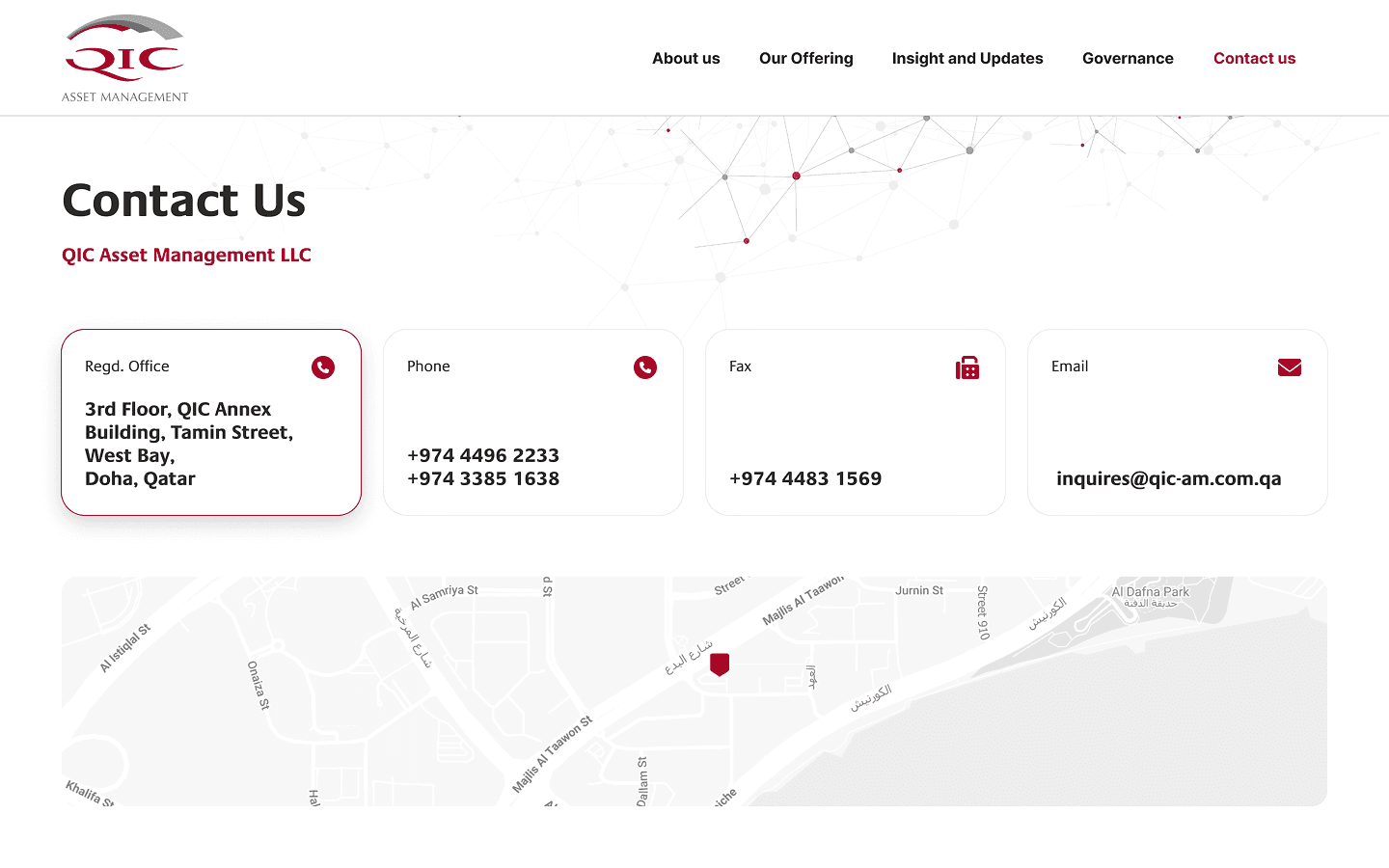
I rebuilt the structure around how institutions actually evaluate a manager. Strategy and philosophy were brought to the front, with the supporting detail underneath. The hierarchy was tightened so the important things read first.
Layouts were standardised for predictability, so the site reveals information in a logical order instead of all at once. Nothing was added; it was sequenced.


What Changed
The experience now reads as serious without feeling cold or austere. An investor can move from the offering to the governance to the detail without friction. That is exactly the path they came to follow.
It respects the reader's time and expertise rather than testing their patience. The discipline of the design mirrors the discipline of the firm.


The Call
The brief could easily have been answered by adding more proof points and more content. I judged the stronger move was to cut and sequence what was already there. In asset management, restraint itself reads as discipline.
Arguing to remove rather than add is the harder case to make to a client. It was better for the firm, so it was worth making.
More Works


FAQ
01
Are you available?
02
Full-time, freelance, or both?
03
What kind of work do you take?
04
Remote, on-site, or both?
05
Bilingual?
06
What do I need to get started?
07
What about unpublished or NDA work?
08
How long does an engagement take?
2026
QIC-AM
Led the redesign, reorganising how the firm presents its strategies, philosophy, and governance. The site was designed to be assessed quickly, not browsed.
Financial Services
Website Design
UI/UX Design
Know More
QIC manages money across many strategies and markets, for an audience of institutional investors. They read a site to verify and decide, not to be inspired. Structure, transparency, and track record are what they check before they will take a meeting.
The site had to feel as large and serious as the firm behind it. It also had to be quick to assess, and those two pull against each other. The work was to convey global scale without burying the reader in it.
Every decision was judged on one question: can a sophisticated reader grasp the offering and the governance fast. Where the answer was no, the structure changed.
The Hard Part
There was no shortage of strong content on the existing site. The problem was that depth kept coming across as density. The more there was, the harder it became to find the point.
Key strategies were not consistently prioritised, the navigation followed internal categories instead of how investors think, and real differentiators competed visually with secondary detail. Assessment took effort it should not have.
What I Did
I rebuilt the structure around how institutions actually evaluate a manager. Strategy and philosophy were brought to the front, with the supporting detail underneath. The hierarchy was tightened so the important things read first.
Layouts were standardised for predictability, so the site reveals information in a logical order instead of all at once. Nothing was added; it was sequenced.
What Changed
The experience now reads as serious without feeling cold or austere. An investor can move from the offering to the governance to the detail without friction. That is exactly the path they came to follow.
It respects the reader's time and expertise rather than testing their patience. The discipline of the design mirrors the discipline of the firm.
The Call
The brief could easily have been answered by adding more proof points and more content. I judged the stronger move was to cut and sequence what was already there. In asset management, restraint itself reads as discipline.
Arguing to remove rather than add is the harder case to make to a client. It was better for the firm, so it was worth making.
More Works
FAQ
01
Are you available?
02
Full-time, freelance, or both?
03
What kind of work do you take?
04
Remote, on-site, or both?
05
Bilingual?
06
What do I need to get started?
07
What about unpublished or NDA work?
08
How long does an engagement take?
2026
QIC-AM
Led the redesign, reorganising how the firm presents its strategies, philosophy, and governance. The site was designed to be assessed quickly, not browsed.
Financial Services
Website Design
UI/UX Design
Know More
QIC manages money across many strategies and markets, for an audience of institutional investors. They read a site to verify and decide, not to be inspired. Structure, transparency, and track record are what they check before they will take a meeting.
The site had to feel as large and serious as the firm behind it. It also had to be quick to assess, and those two pull against each other. The work was to convey global scale without burying the reader in it.
Every decision was judged on one question: can a sophisticated reader grasp the offering and the governance fast. Where the answer was no, the structure changed.
The Hard Part
There was no shortage of strong content on the existing site. The problem was that depth kept coming across as density. The more there was, the harder it became to find the point.
Key strategies were not consistently prioritised, the navigation followed internal categories instead of how investors think, and real differentiators competed visually with secondary detail. Assessment took effort it should not have.
What I Did
I rebuilt the structure around how institutions actually evaluate a manager. Strategy and philosophy were brought to the front, with the supporting detail underneath. The hierarchy was tightened so the important things read first.
Layouts were standardised for predictability, so the site reveals information in a logical order instead of all at once. Nothing was added; it was sequenced.
What Changed
The experience now reads as serious without feeling cold or austere. An investor can move from the offering to the governance to the detail without friction. That is exactly the path they came to follow.
It respects the reader's time and expertise rather than testing their patience. The discipline of the design mirrors the discipline of the firm.
The Call
The brief could easily have been answered by adding more proof points and more content. I judged the stronger move was to cut and sequence what was already there. In asset management, restraint itself reads as discipline.
Arguing to remove rather than add is the harder case to make to a client. It was better for the firm, so it was worth making.
More Works
FAQ
Are you available?
Full-time, freelance, or both?
What kind of work do you take?
Remote, on-site, or both?
Bilingual?
What do I need to get started?
What about unpublished or NDA work?
How long does an engagement take?