
2024
Supreme Committee For Delivery & Legacy
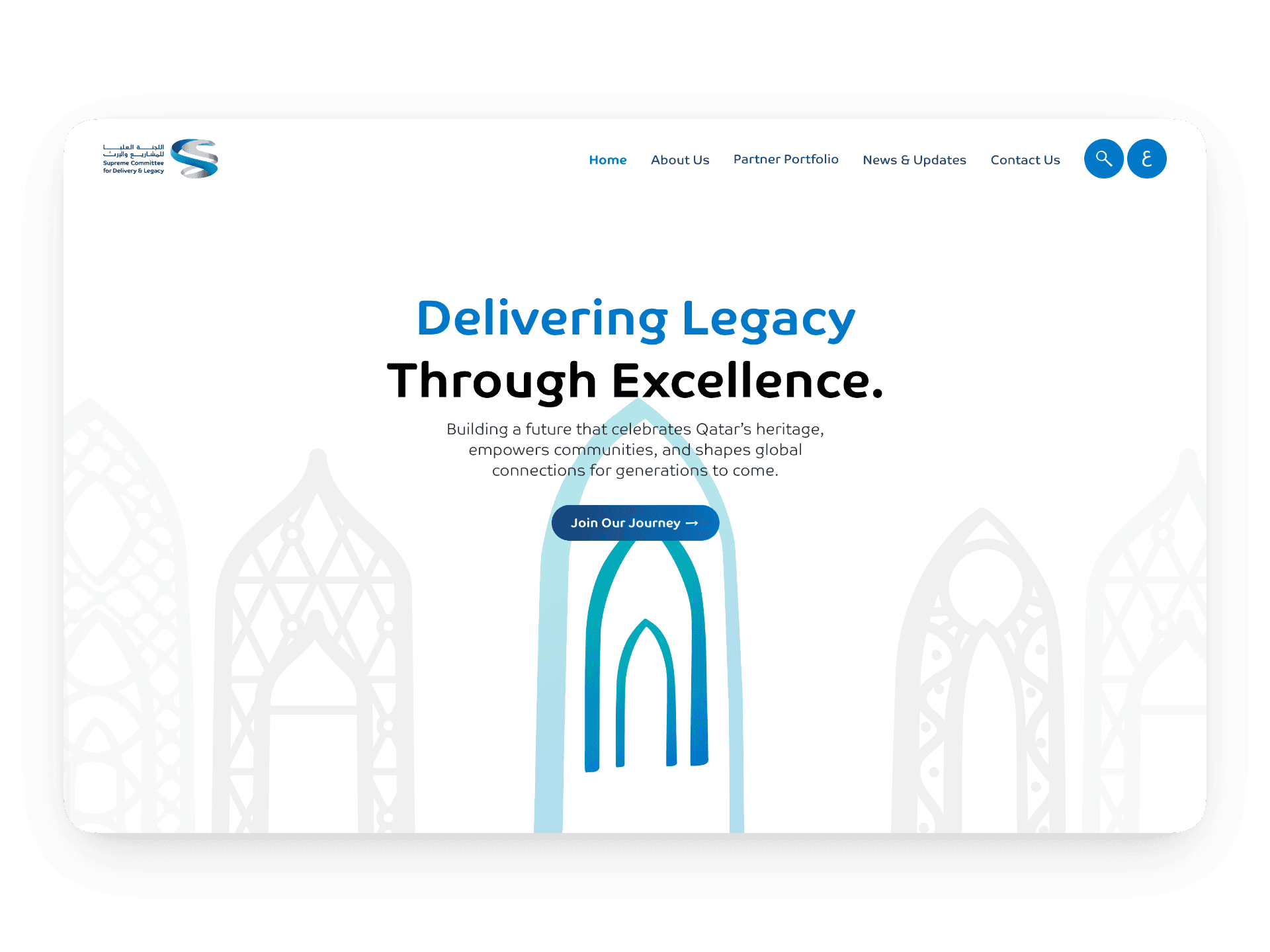
The Supreme Committee for Delivery and Legacy is the governing body responsible for overseeing national scale programs, infrastructure delivery, and long term legacy initiatives. This project focused on designing a public facing digital platform that communicates responsibility, progress, and transparency at a national and international level.
Conceptual
Proposal
Know More
When a platform represents a nation, design carries accountability. The digital experience for the Supreme Committee needed to communicate authority without distance and transparency without confusion. Every interaction had to feel deliberate, accurate, and aligned with the weight of public responsibility.
A government website designed to communicate authority, transparency, and national responsibility through clarity and structure.
The project aimed to support public communication and stakeholder confidence across a wide range of initiatives. Structure, hierarchy, and consistency were treated as trust signals. The experience was designed to make complex programs understandable while maintaining institutional credibility.
Problem
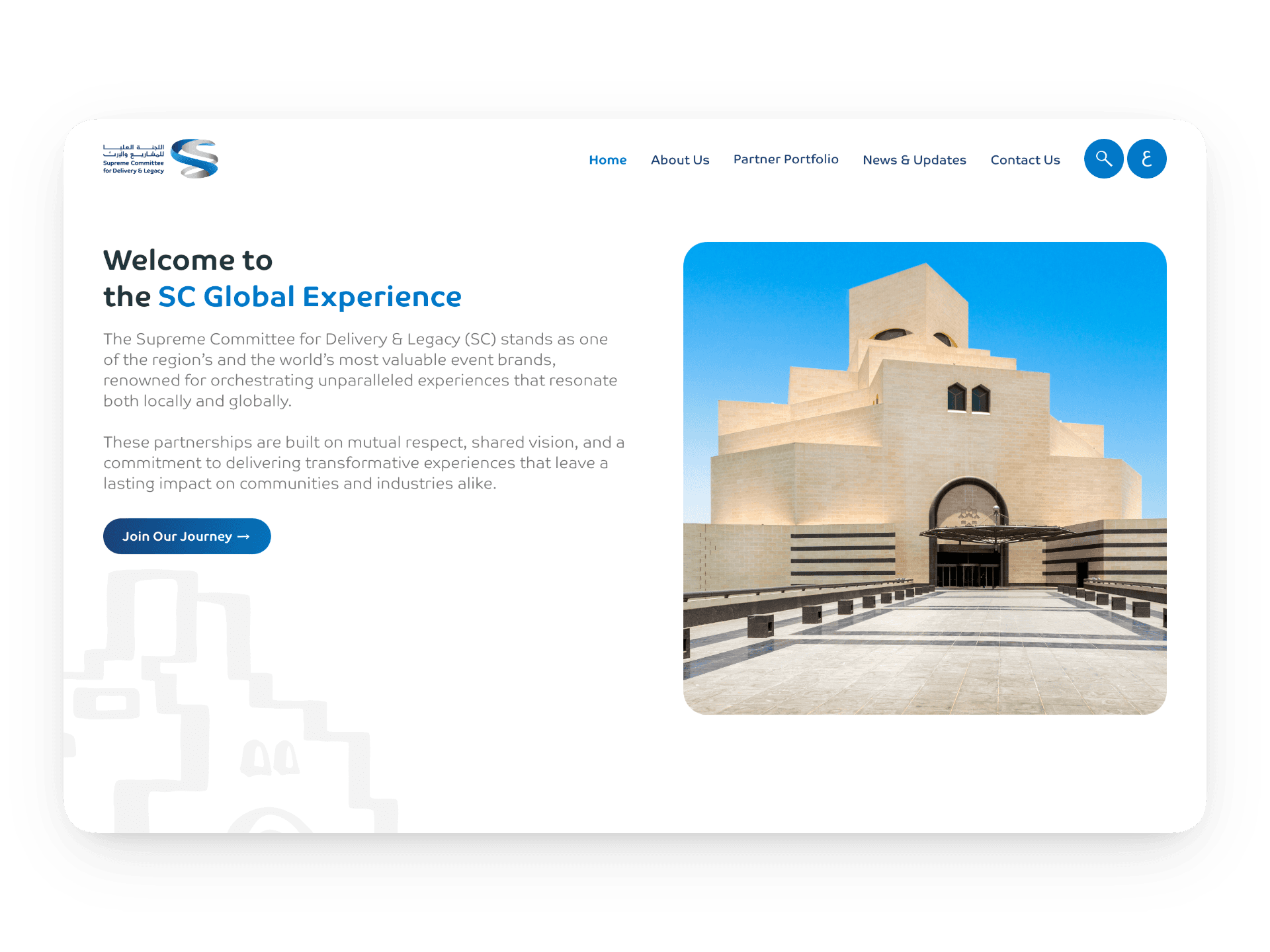
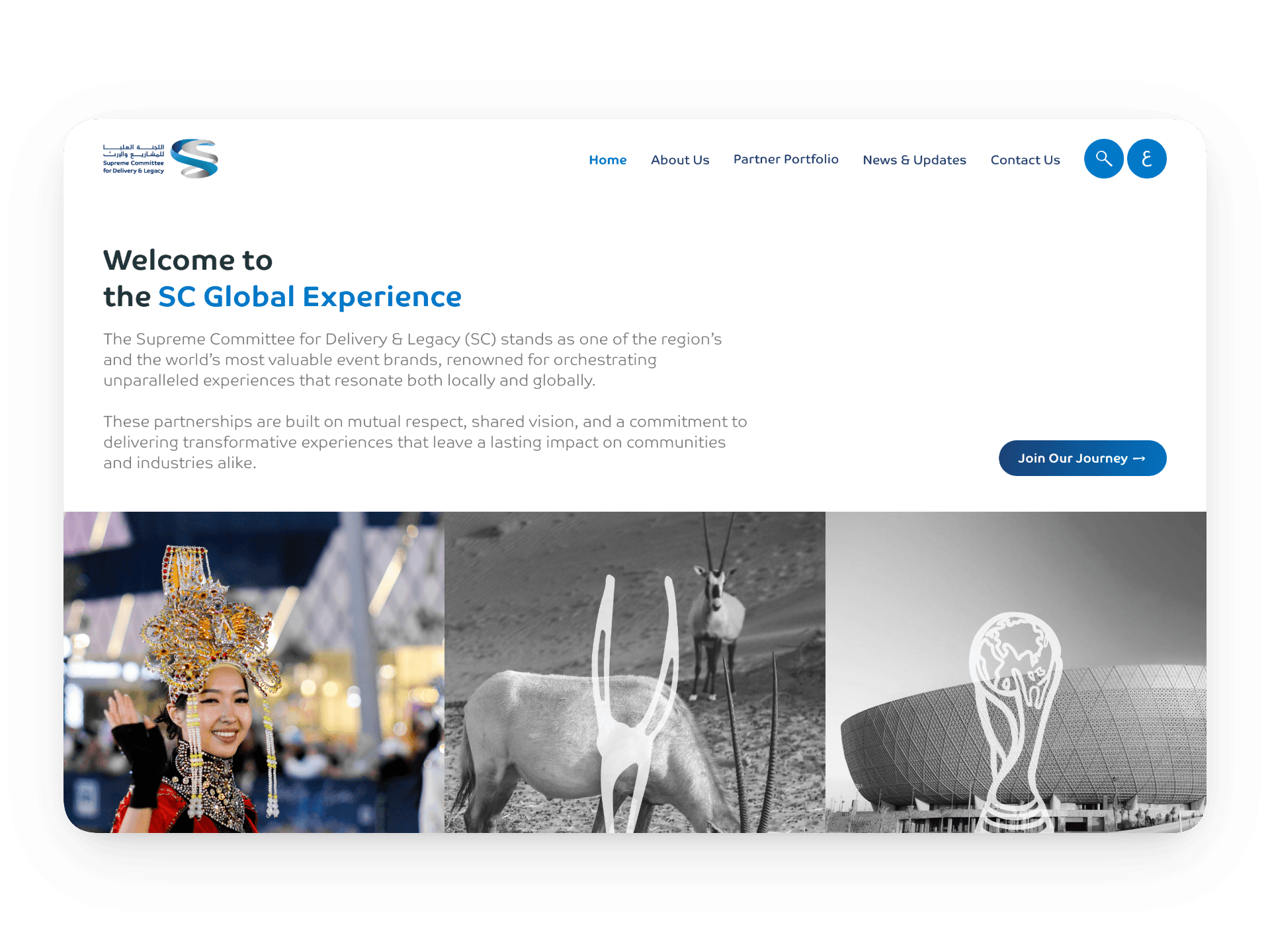
Government platforms serve diverse audiences with different expectations and levels of familiarity. The scale of the Supreme Committee’s mandate introduced significant content complexity. Without clear structure, information risked becoming fragmented, making it harder for users to understand progress and priorities.
Content breadth made prioritization difficult. Navigation needed to support both exploration and direct access. Key initiatives risked being buried under volume. Page layouts varied across sections, affecting predictability. Maintaining accuracy and clarity across frequent updates was an ongoing challenge.
Solution
The solution focused on governance through design. Structure was used as a tool to communicate reliability and control. Every decision was evaluated based on how it supported clarity, accuracy, and ease of access for a wide public audience.
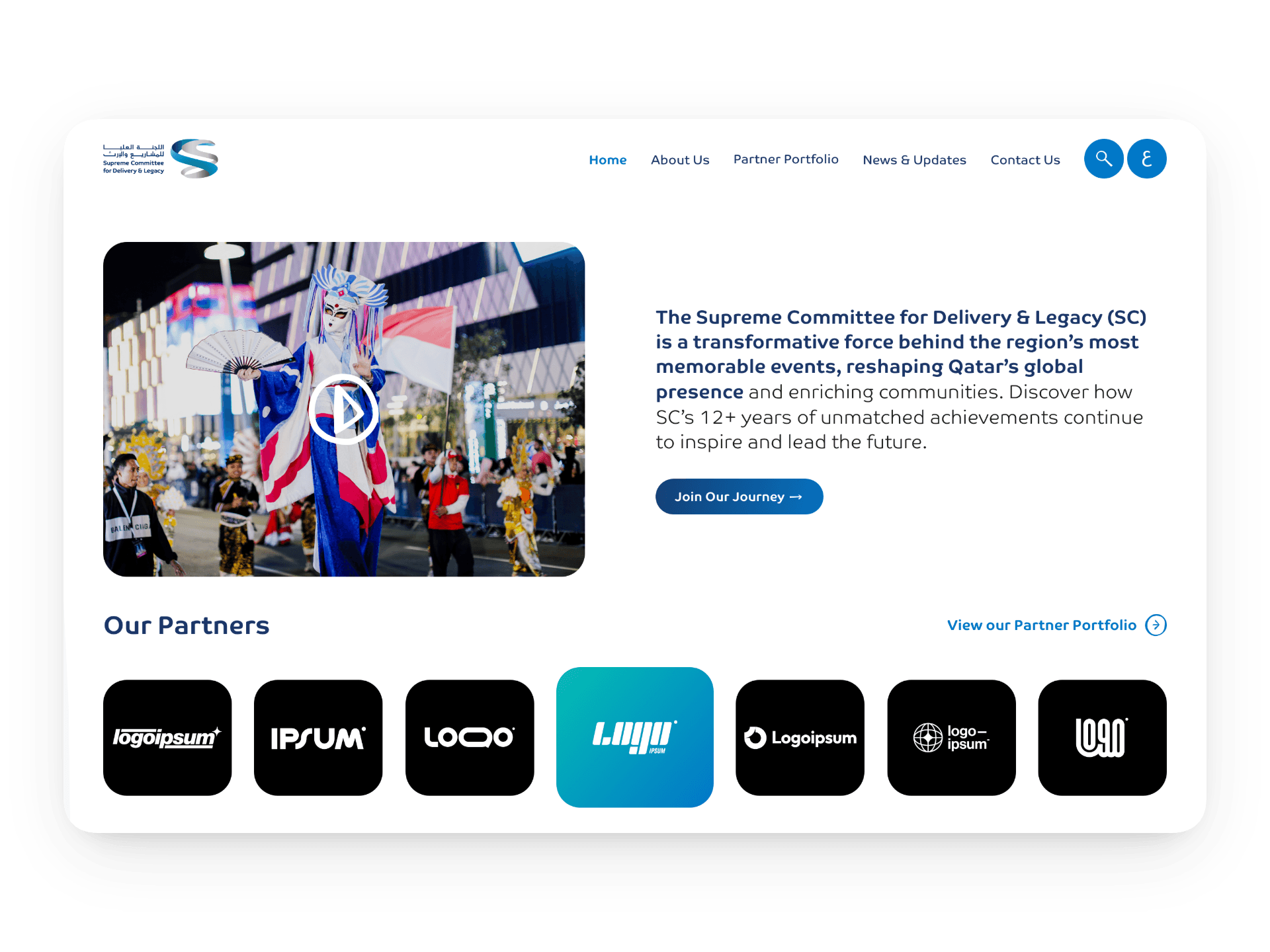
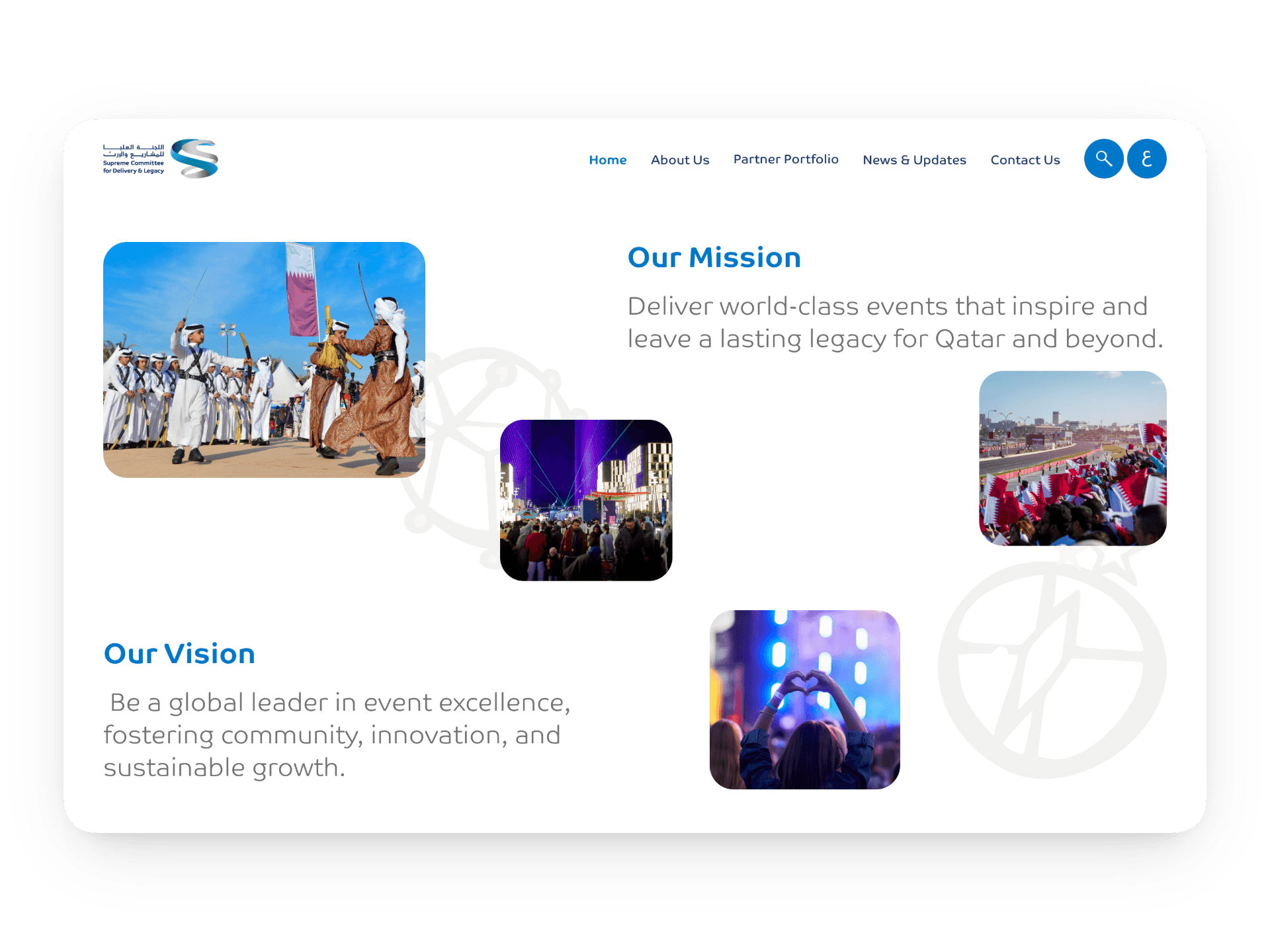
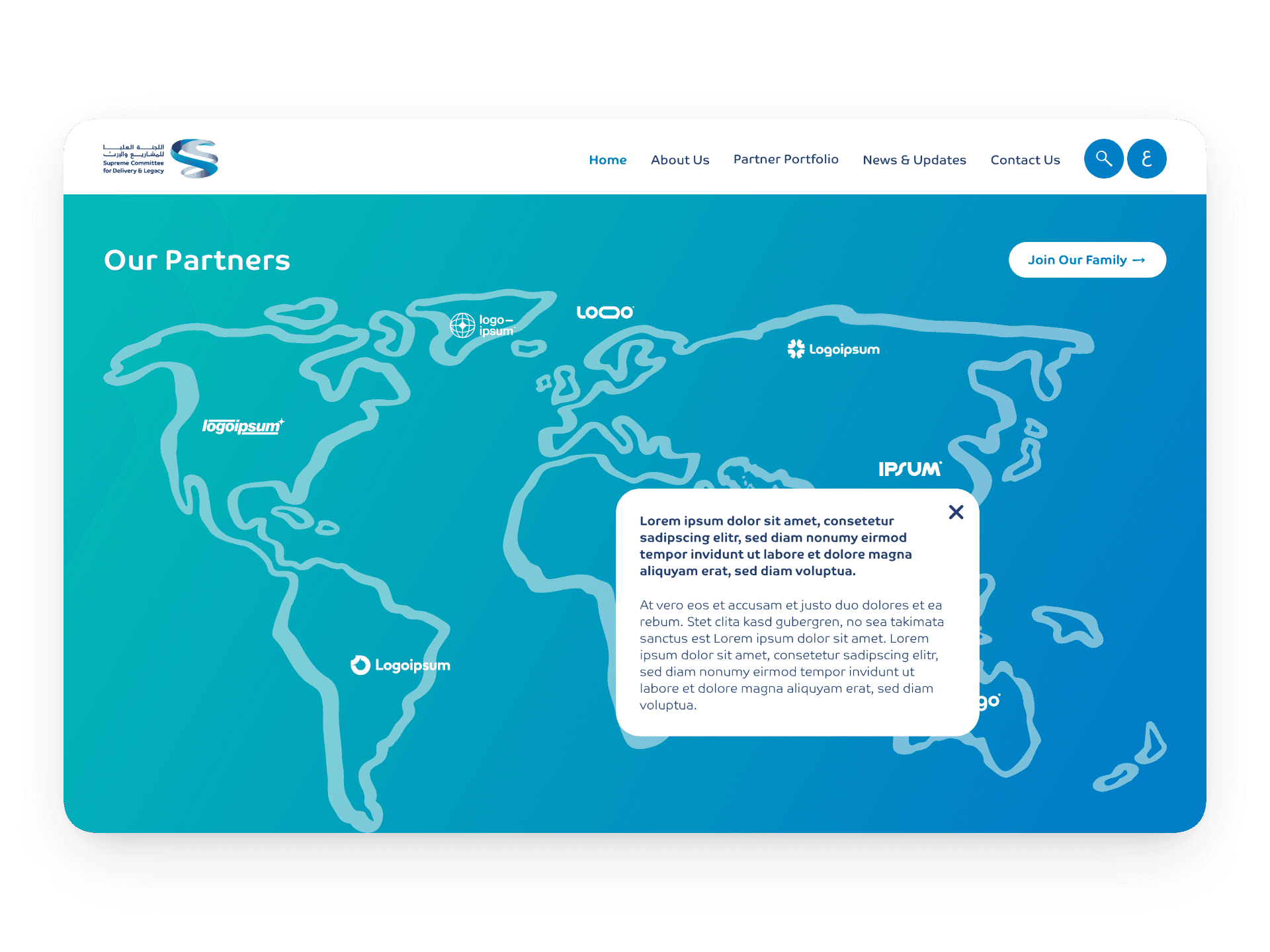
Information architecture was organized around core mandates and initiatives. Navigation was clarified to support different audience needs. Page templates were standardized to improve consistency. Hierarchy was applied to surface priority information. The platform now communicates order, trust, and accountability.
Concept
The guiding concept was authority through transparency. Trust is built when information is accessible, structured, and reliable.
The interface emphasizes clarity and consistency. Content is organized to support understanding at scale. Visual restraint reinforces seriousness. Design decisions support public accountability by making information easy to find, interpret, and trust.
More Works
2024
Supreme Committee For Delivery & Legacy
The Supreme Committee for Delivery and Legacy is the governing body responsible for overseeing national scale programs, infrastructure delivery, and long term legacy initiatives. This project focused on designing a public facing digital platform that communicates responsibility, progress, and transparency at a national and international level.
Conceptual
Proposal
Know More
When a platform represents a nation, design carries accountability. The digital experience for the Supreme Committee needed to communicate authority without distance and transparency without confusion. Every interaction had to feel deliberate, accurate, and aligned with the weight of public responsibility.
A government website designed to communicate authority, transparency, and national responsibility through clarity and structure.
The project aimed to support public communication and stakeholder confidence across a wide range of initiatives. Structure, hierarchy, and consistency were treated as trust signals. The experience was designed to make complex programs understandable while maintaining institutional credibility.
Problem
Government platforms serve diverse audiences with different expectations and levels of familiarity. The scale of the Supreme Committee’s mandate introduced significant content complexity. Without clear structure, information risked becoming fragmented, making it harder for users to understand progress and priorities.
Content breadth made prioritization difficult. Navigation needed to support both exploration and direct access. Key initiatives risked being buried under volume. Page layouts varied across sections, affecting predictability. Maintaining accuracy and clarity across frequent updates was an ongoing challenge.
Solution
The solution focused on governance through design. Structure was used as a tool to communicate reliability and control. Every decision was evaluated based on how it supported clarity, accuracy, and ease of access for a wide public audience.
Information architecture was organized around core mandates and initiatives. Navigation was clarified to support different audience needs. Page templates were standardized to improve consistency. Hierarchy was applied to surface priority information. The platform now communicates order, trust, and accountability.
Concept
The guiding concept was authority through transparency. Trust is built when information is accessible, structured, and reliable.
The interface emphasizes clarity and consistency. Content is organized to support understanding at scale. Visual restraint reinforces seriousness. Design decisions support public accountability by making information easy to find, interpret, and trust.
More Works
2024
Supreme Committee For Delivery & Legacy
The Supreme Committee for Delivery and Legacy is the governing body responsible for overseeing national scale programs, infrastructure delivery, and long term legacy initiatives. This project focused on designing a public facing digital platform that communicates responsibility, progress, and transparency at a national and international level.
Conceptual
Proposal
Know More
When a platform represents a nation, design carries accountability. The digital experience for the Supreme Committee needed to communicate authority without distance and transparency without confusion. Every interaction had to feel deliberate, accurate, and aligned with the weight of public responsibility.
A government website designed to communicate authority, transparency, and national responsibility through clarity and structure.
The project aimed to support public communication and stakeholder confidence across a wide range of initiatives. Structure, hierarchy, and consistency were treated as trust signals. The experience was designed to make complex programs understandable while maintaining institutional credibility.
Problem
Government platforms serve diverse audiences with different expectations and levels of familiarity. The scale of the Supreme Committee’s mandate introduced significant content complexity. Without clear structure, information risked becoming fragmented, making it harder for users to understand progress and priorities.
Content breadth made prioritization difficult. Navigation needed to support both exploration and direct access. Key initiatives risked being buried under volume. Page layouts varied across sections, affecting predictability. Maintaining accuracy and clarity across frequent updates was an ongoing challenge.
Solution
The solution focused on governance through design. Structure was used as a tool to communicate reliability and control. Every decision was evaluated based on how it supported clarity, accuracy, and ease of access for a wide public audience.
Information architecture was organized around core mandates and initiatives. Navigation was clarified to support different audience needs. Page templates were standardized to improve consistency. Hierarchy was applied to surface priority information. The platform now communicates order, trust, and accountability.
Concept
The guiding concept was authority through transparency. Trust is built when information is accessible, structured, and reliable.
The interface emphasizes clarity and consistency. Content is organized to support understanding at scale. Visual restraint reinforces seriousness. Design decisions support public accountability by making information easy to find, interpret, and trust.
More Works